June 2, 2026
Yamato City Dementia Supporters
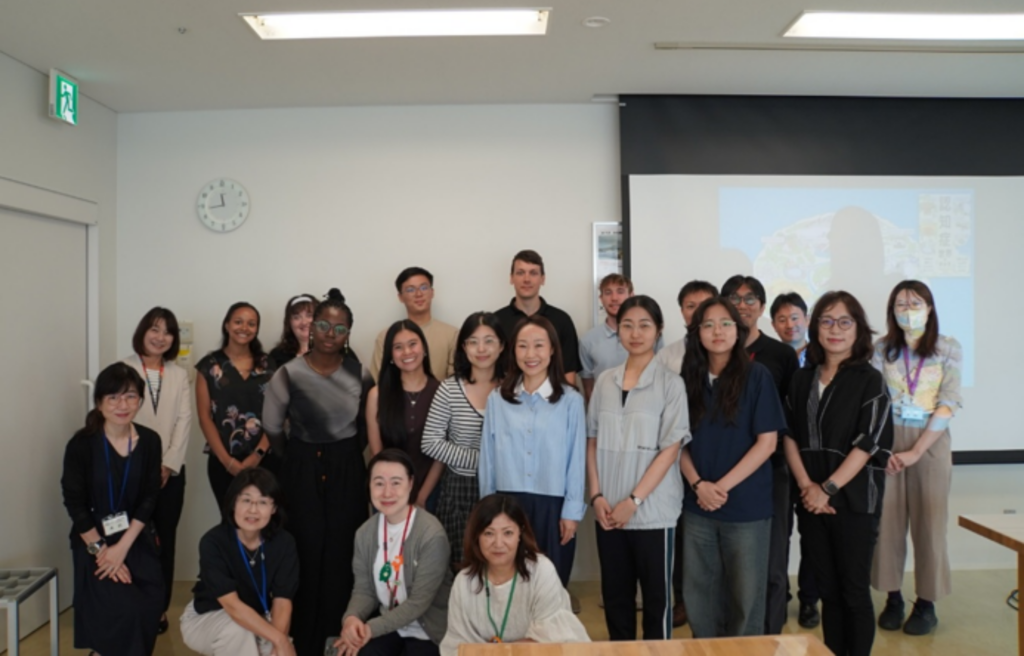
The number of people living with dementia continues to rise globally. We visited Yamato City’s Dementia Supporter Program, which offered valuable insight into Japan’s community-based approach to dementia care.
By participating in Dementia Supporter Training activities, we gained a deeper understanding of the experiences of people living with dementia and learned ways to assist them. The book “A Guide to Walking Through the World of Dementia” was designed to help people understand dementia from the perspectives of the person with dementia. It took us to an unfamiliar, mysterious land that represented cognitive challenges such as memory loss, spatial disorientation, or sensory changes, and incorporated real-life case studies and practical solutions.
Yamato City’s Dementia Supporter program’s strength lies in its emphasis on social inclusion, raising awareness, and community support, reminding us that supportive communities are built by their members. Raising awareness of dementia in the community is essential for supporting people living with dementia to stay active, engaged, and connected.
Helte’s Sail
Helte, a Japanese startup, rethinks how we view aging in a super-aged society. Rather than seeing older adults as a burden to society, it recognizes them as valuable contributors with knowledge, experience, and skills that can benefit others.
During our visit, we learned about Helte’s platform, Sail, which connects Japanese learners worldwide with older adults in Japan through structured online conversations. The program not only supports language learning and cultural exchange but also creates meaningful opportunities for older adults to remain socially engaged and connected. We also learned about the Sail Yume Project, an international Japanese speech contest, and Sewa-Katsu, a program that supports foreign nationals living and working in Japan.
What stood out was Helte’s commitment to innovation in aging. Through collaborations with local governments, healthcare organizations, and universities, it is involved in projects related to healthy aging, digital inclusion, and the early detection of dementia using technologies such as voice tone and facial expressions.
Helte exemplified how creative approaches can transform aging into an opportunity for social participation, a sense of purpose, and enhanced well-being among older adults.
Yoon Chung Kim
PhD student in Gerontology (epidemiology track) | UMB-UMBC